
Sewer Repair & Replacement in Los Angeles
Some sewer lines can be repaired.Others have to be replaced.
Repair and replacement options for damaged, deteriorated, or failing drain and sewer piping, based on the condition and accessibility of the line. We assess what can be reached, explain what we find, and go through the options with you.
- 5.0 ★ on Google & Yelp · 230+ reviews
- CSLB C-36 #1087910
- Mon–Fri 6 AM–6 PM · Sat 7 AM–4 PM
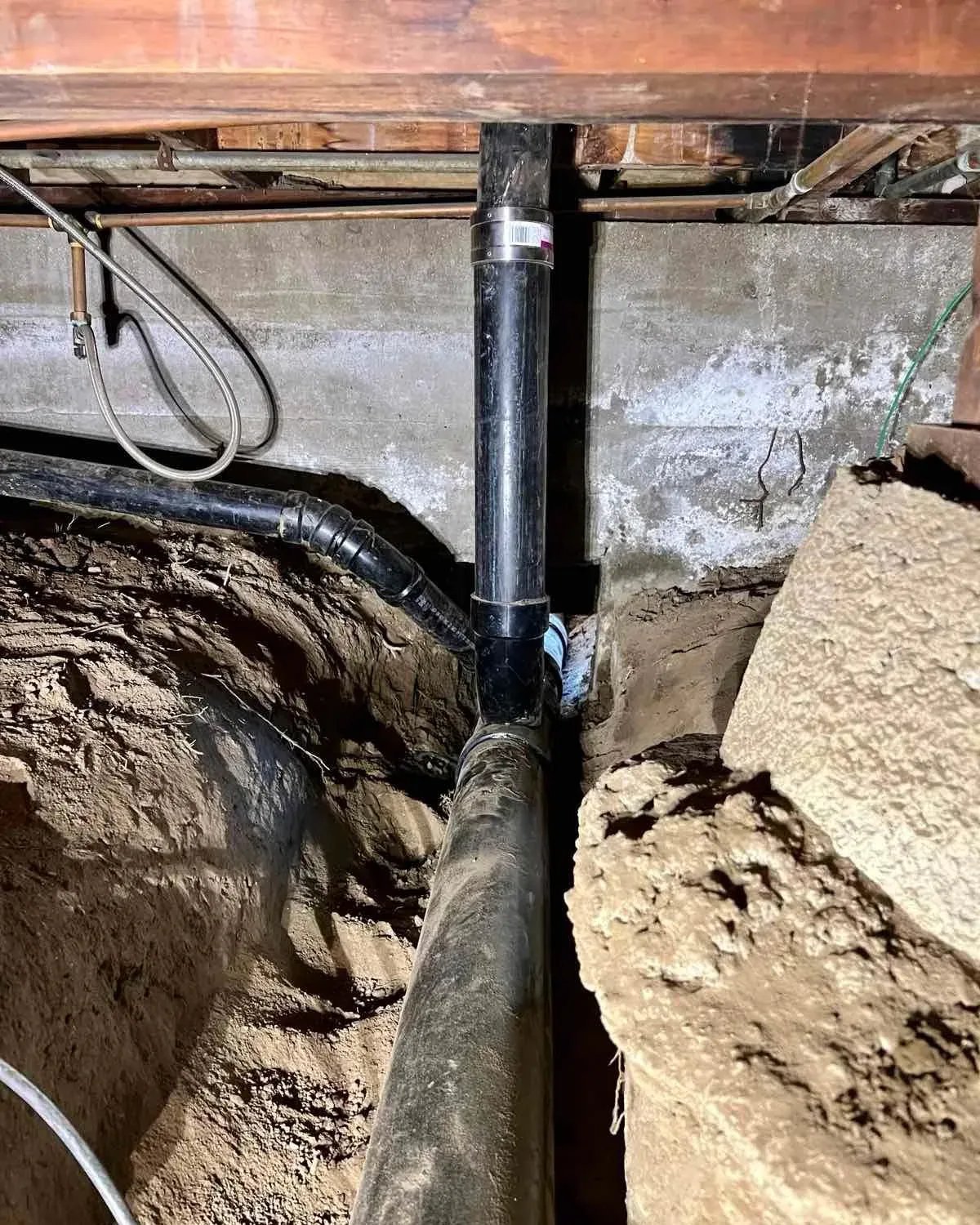
What usually brings us out.
These are the things people notice before a sewer line gets properly looked at. None of them settles what is wrong on its own, and all of them are worth a call.
The main line has backed up more than once, and cleaning it does not hold for long.
More than one fixture backs up at the same time, and the lowest ones go first.
There is a sewage smell in the yard, the crawl space, or around a cleanout.
A patch of lawn stays soft, sunken, or greener than everything around it.
A drain gurgles, or water comes back up somewhere else when a fixture is used.
A camera inspection or an earlier visit pointed at the line itself rather than what was in it.
The building is old enough that nobody knows what the underground line is made of.
Tell us what the line has been doing and how long it has been doing it.
Why sewer lines fail.
A line rarely gives out all at once. What is happening to it, and how much of the run it affects, is what decides the options.
Roots at the joints
Roots find the seams and small openings in an older line, then widen them from the inside. Plenty of Los Angeles properties have mature trees sitting directly over a clay or cast iron lateral.
Cracks, breaks, and separated joints
Ground movement, settling, and age pull sections out of line or open them up. Soil finds its way in, and what should be running through the pipe starts leaving it.
Low spots that hold water
A section that has sagged no longer drains on its own. Waste stands in it, and the line blocks in the same place again and again.
Pipe that has deteriorated inside
Cast iron corrodes and scales over. Older clay gets rough and brittle. The usable diameter narrows, and cleaning stops holding for as long as it used to.
What cleaning will not correct
Cleaning takes out what is in the line. It does not change the condition of the pipe around it. So a line that blocks in the same place again soon after it has been cleared is usually telling you something about the pipe rather than about what was standing in it. Where that is what we are seeing, a sewer camera inspection as a separate recommended service is often how the condition and the access get evaluated before any repair is proposed.
Repair, or replacement?
That is not something we decide before we get there. It comes out of the condition of the line and how much of it can be reached.
Damage in one part of the run
Repair a section
- Damage that sits in one part of a line where the pipe either side of it is still in usable condition.
- A break, a separated joint, or a crushed section that can be reached and worked on directly.
- Access counts as much as the damage does. How deep the line runs and what sits over it changes what the work involves.
- Repairing a section addresses that section. It does not change the age or the condition of the pipe around it.
Where a repair is the appropriate call, we explain what it covers and what it leaves untouched.
Condition along the whole run
Replace the line
- Deterioration, root damage, or low spots showing up in more than one place along the run.
- Pipe far enough through its service life that repairing one section leaves the rest in the same condition.
- A line that has collapsed, or one a cable and a camera can no longer get through.
- A larger job than a spot repair. Depth, access, what sits over the line, and permitting all feed into what it involves.
Where replacement is what the line calls for, we say so, and we go through what that means before anything is approved.
Our goal is to identify the cause of the problem and recommend an appropriate repair based on the plumbing condition, accessibility, and scope of work.
How the work gets done.
Three approaches, and none of them is the one we reach for first. Which are even on the table depends on the condition of the pipe, what can be reached, and what sits over the line.
Traditional excavation
The line is dug down to and the damaged pipe is taken out and replaced. Reaching the pipe directly is what makes it workable across the widest range of conditions, including lines that rule the other two approaches out.
What decides it
Depth, what sits over the line, and how the property can be accessed.
Trenchless pipe lining
A new liner is installed inside the existing pipe through an access point, so less of the property has to be opened up to get to the line.
What decides it
The existing pipe has to be in a condition that can carry a liner, and the access has to be there. Not every line qualifies.
Pipe bursting
The old pipe is replaced along the path it already runs, worked from access points rather than by opening the full length of the run.
What decides it
The path of the line, what else runs near it, and the condition and access at each end.
Trenchless is an option, not a policy
Trenchless work is not our default and it is not available on every line. Where it is an option, we say so. Where the condition of the pipe or the access rules it out, we explain why and what the alternative involves.
How we get to a recommendation.
The same order every time. What changes is what the line turns out to be.
We start with what you are seeing
Where it backs up, how often, what has already been done to it, and what kind of property it is. That narrows things down well before anything gets opened up.
We look at condition and access
What the accessible sections of the line are in, where it can be reached, how deep it runs, and what sits over it. Those are the facts that decide what is actually on the table.
We explain the options and put a number to them
We assess the issue, explain our findings, and provide an estimate before any approved work begins. Where more than one approach is workable, you hear what separates them.
What does sewer repair or replacement cost in Los Angeles?
A section repair and a full line replacement are not the same job, and two lines at different depths under different properties are not either. Pricing depends on the plumbing condition, accessibility, materials, and actual scope of work. If additional work is discovered, it will be explained and approved before proceeding.
Rated 5.0 by LA homeowners.
Real reviews, in their own words. Each card opens the listing it came from.
“Best experience I’ve ever had with a plumber… took a video of the pipe.”
“Called at 8:45am… paying for the resolved issue by 10:30am.”
“If you have plumbing issues and need it done quick, this is the guy for you! He arrived the same day and fixed all my drains! We had a few clogs and a leak which were all fixed in an hour or so. I'd give 10/5 stars if I could!”
Sewer repair questions, answered.
The things people want settled before they call. For anything else, just give us a ring.

How do you decide whether the line needs a repair or a replacement?
It comes out of the line, not out of a preference. We look at what the accessible sections are in, where the damage sits, how much of the run it affects, how deep the line is, and where it can be reached. Then we explain what we found and go through the options with you.
Will you have to dig up my yard?
Sometimes, and how much depends on the line. Trenchless approaches work from access points rather than by opening the whole run, which means less of the property gets disturbed. They are not available on every line. The condition of the existing pipe, the path it takes, how deep it runs, and what sits over it all decide what is possible. We go through that before anything is approved.
Is trenchless always better than digging?
No. It is one option among several and it depends on the line. Where the existing pipe is not in a condition that can carry a liner, or the access is not there, or the path rules it out, excavation is the approach that works. We tell you which options apply to your line and what separates them.
How long will a sewer repair last?
That depends on the condition of the line, the materials, the ground it sits in, and how much of the original pipe stays in service, so we will not put a number on it for a line we have not seen. What we can tell you is what condition the accessible sections are in and what that means for the work being proposed. We offer a one-year workmanship warranty on most installations. Manufacturer warranties apply where applicable. Warranty coverage depends on the type of repair or installation.
What if the line runs under the driveway, the house, or a mature tree?
It changes the job, and it is one of the first things we check. What sits over a line affects how it can be reached, which approaches are workable, and what putting the surface back involves. None of that is guesswork we do after starting. It is explained as part of the findings.
Do you do this work for property managers and HOAs?
Yes. We work with property managers, HOAs, and owners across Los Angeles, on single units and on shared and main lines. Call the office and we will go through the property, the access, and what is needed.
Sewer repair and replacement across LA & the Valley.
Based in Studio City. Serving Los Angeles and surrounding communities with realistic arrival windows and clear communication.
Let's find out what the line actually needs.
Call now and talk to a licensed plumber. We assess the issue, explain our findings, and provide an estimate before any approved work begins.
Mon–Fri 6 AM–6 PM · Sat 7 AM–4 PM · CSLB C-36 #1087910