
When the water bill jumps and nothing about the household changed, the money is going somewhere. Usually it is going through a leak you cannot see. The good news: two tests you can run today, with no tools, will tell you a lot about whether a leak exists and roughly where it lives.
The signs a leak is hiding
- A water bill noticeably higher than the same month last year, with no new habits to explain it.
- Water stains, bubbling paint, or soft spots on walls, ceilings, or baseboards.
- A warm patch on a concrete floor, which can mean a hot water line leaking under the slab.
- A musty smell in one room that cleaning never fixes.
- The sound of water moving when every fixture is off.
- A patch of lawn that stays green and soft while the rest dries out.
One sign on its own proves little. Two together are worth taking seriously, and the meter test below is how you check without opening anything.
The water meter test you can run today
- Turn off every fixture and appliance that uses water: taps, ice maker, washing machine, irrigation.
- Find your water meter. In most Los Angeles homes it sits in a concrete box at the curb or parkway.
- Look for the small low-flow indicator on the dial. On most meters it is a little triangle or star-shaped wheel.
- Watch it for two minutes. With everything off, it should be perfectly still.
- If it moves, note the meter reading, wait thirty minutes without using water, and read it again.
A spinning indicator or a changed reading means water is leaving the system with everything off. That is a leak, somewhere between the meter and your fixtures. If the movement stops when you close the house's main shutoff valve, the leak is inside the house; if it keeps moving, the problem sits in the line between the meter and the house.
The quiet expense: a running toilet
Before suspecting the slab, check the toilets. A flapper that no longer seals lets water trickle from tank to bowl around the clock, silently, and it moves a surprising amount of water. Put a few drops of food coloring in the tank, wait fifteen minutes without flushing, and look at the bowl. Color in the bowl means the flapper leaks. It is one of the cheapest parts in plumbing, and one of the most expensive to ignore.
Why some leaks stay hidden
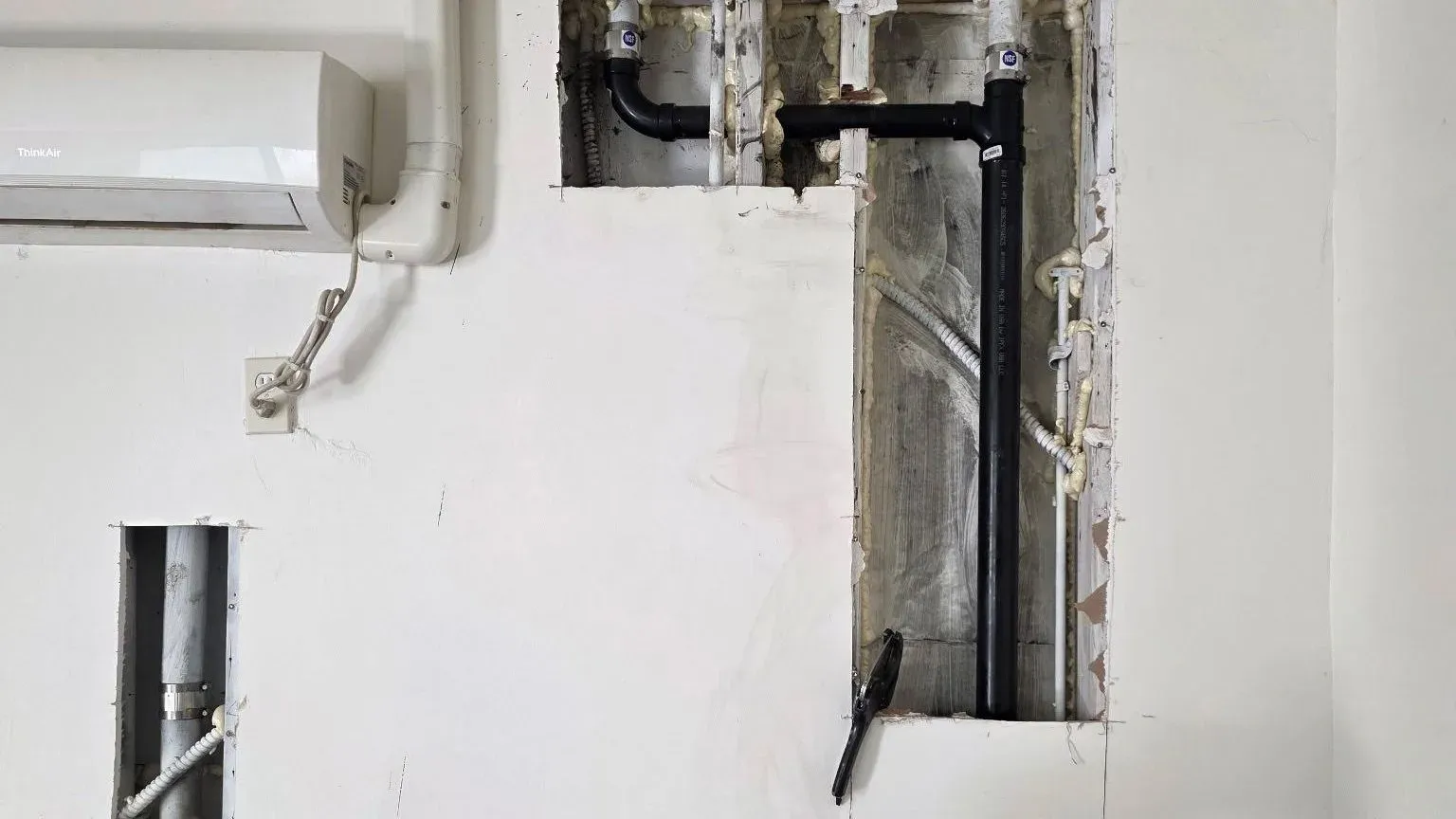
Water lines run through the places a house keeps out of sight: inside wall cavities, under slab foundations, underground between the meter and the house. A pinhole in a copper line can run for months behind drywall before anything shows on the surface, and by then the water damage is often the bigger repair. That is why a moving meter with no visible water deserves a prompt look rather than a wait-and-see.
How we can help
We assess and repair accessible water leaks, drain leaks, and fixture problems throughout the property. Our goal is to identify the cause of the problem and recommend an appropriate repair based on the plumbing condition, accessibility, and scope of work.
